The story so far
India E20 Petrol Policy
Tracked across 3 sources · Updated 12h ago
The Indian government defends E20 petrol, citing evidence-based rollout and no plan for higher blends. Premium petrol remains ethanol-free. Officials note mileage impact in older vehicles and rule out returning to E0 or E10.
How it unfolded
1d ago
Premium petrol to remain ethanol-free
1d ago
No plan to return to pure petrol, E20 is clean fuel
3d ago
E20 cuts mileage up to 5% in older vehicles
4d ago
Govt defends E20 rollout, no verified engine failure
What happened earlier
Latest updates
Latest
Full story →Premium Petrol To Stay Ethanol-Free, Says Govt; Rules Out Restoring E0 Or E10
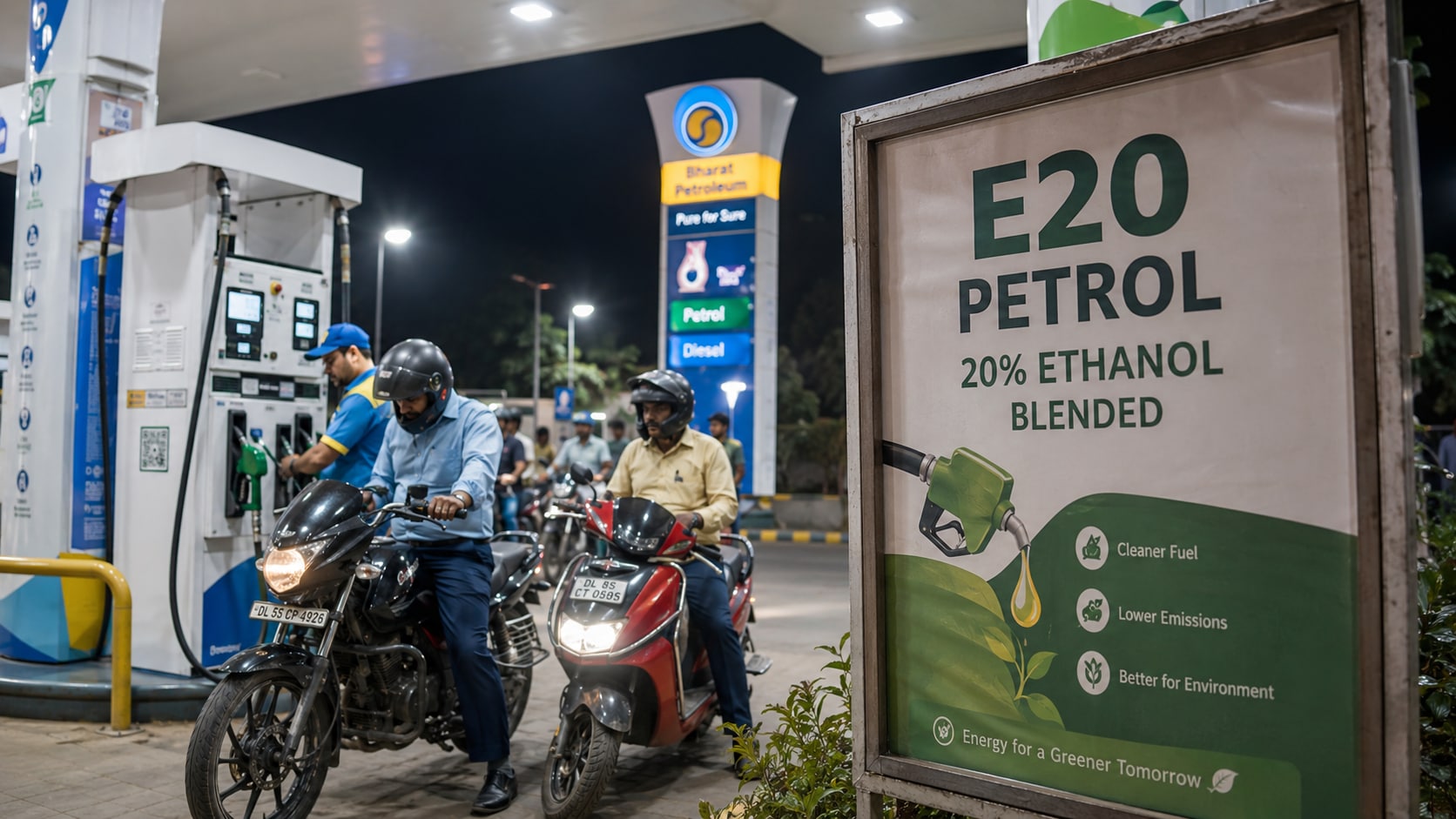
Indian government says premium petrol will remain ethanol-free.
Premium fuels have specialized formulations for high-performance vehicles.
Premium petrol accounts for just 0.5% of India's petrol sales.
Government rules out restoring E0 or E10 for premium grade.



Earlier · 4d ago
Full story →E20 petrol debate: Govt cites data for 23 crore vehicles, says 'no verified evidence' of widespread engine failure
Minister Suresh Gopi says no verified evidence of widespread engine failure from E20 fuel
Government cites data from 23 crore vehicles to support E20 adoption
Ethanol blending rose from 1.53% in 2013-14 to 20% in 2025-26 after scientific evaluation
Earlier · 3d ago
Full story →Confused By E20, E30, E85? Benefits, Differences And Compatibility; Every Vehicle Owner Should Know
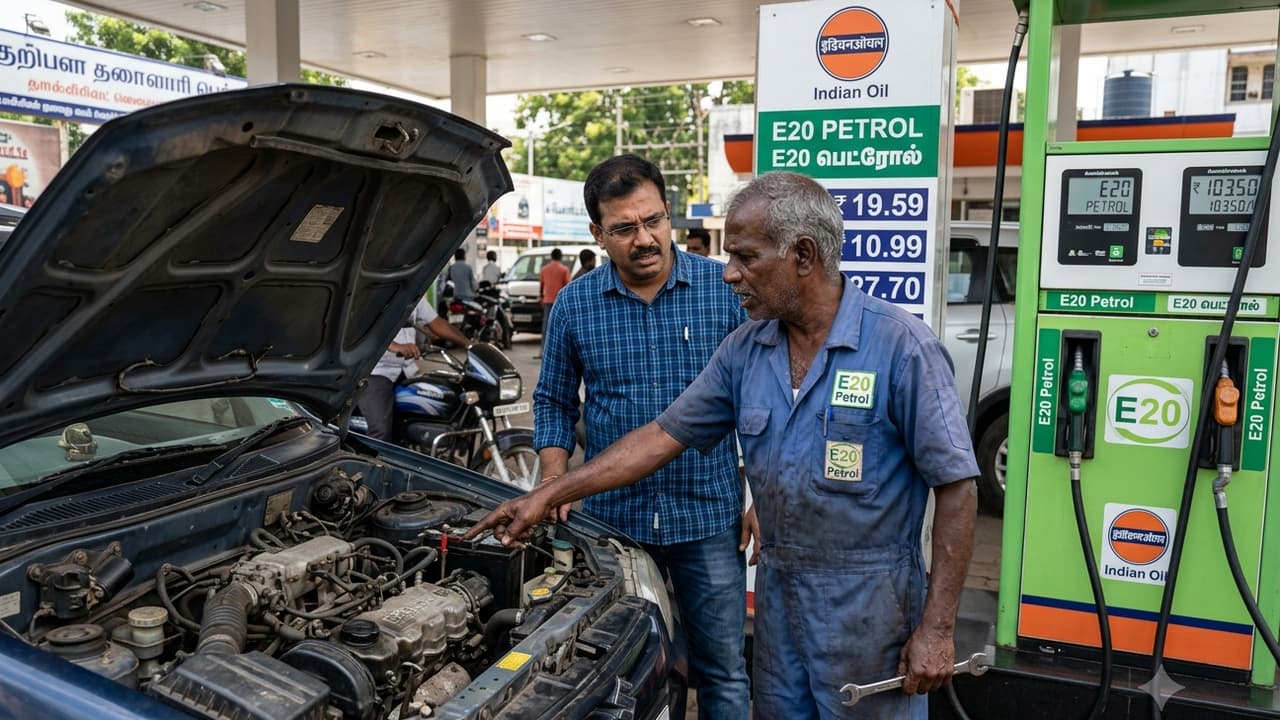
E20, E30, and E85 denote ethanol-gasoline blends with 20%, 30%, and 85% ethanol respectively.
Flex Fuel vehicles can run on high-ethanol blends like E85 up to 100% ethanol.
The Indian government has mandated phased rollout of E20 fuel from April 2023 and aims for 20% ethanol blending by 2025.
E20 is approved for cars manufactured after 2023; older vehicles may need modifications.
Higher ethanol blends offer lower emissions but can reduce fuel efficiency and may affect engine components in non-compatible vehicles.